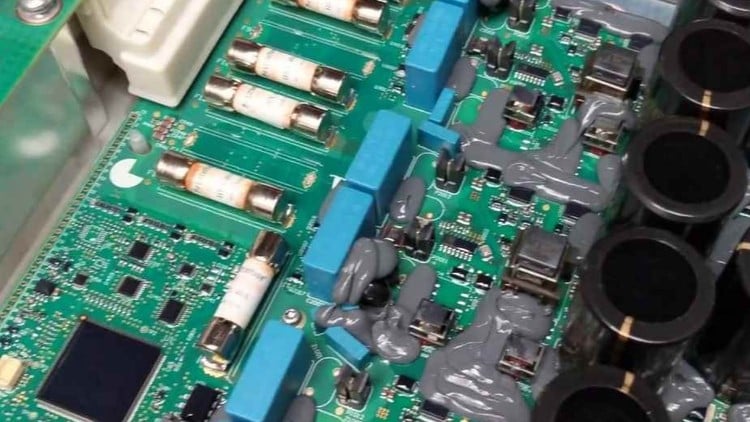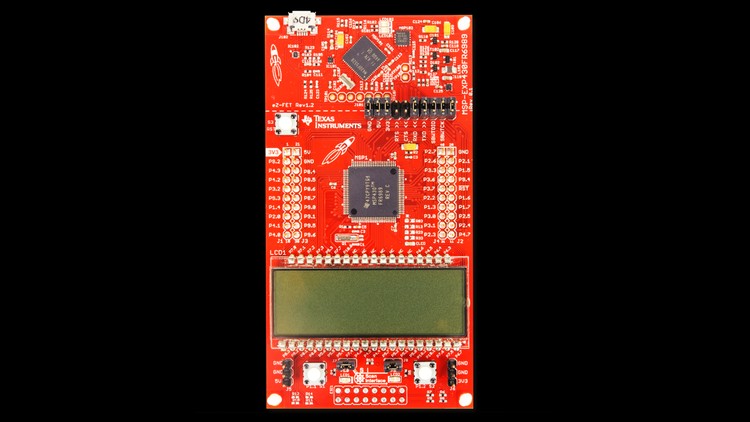
TI TMS320F28379D Microcontroller for Power Electronics
Vi điều khiển TI TMS320F28379D cho Điện tử Công suất

4.6
(150 đánh giá)
684 học viên

Giảng viên
Shivkumar Iyer
Phụ đề tiếng Anh
Bán chạy
Đánh giá cao
50.000đ
399.000đ
-87%
Bao gồm phụ đề tiếng Việt, tiếng Anh
26.5 giờ video
164 bài giảng
Truy cập vĩnh viễn
Học trên mọi thiết bị
Cập nhật: 28/05/2026
Bạn sẽ học được gì
Yêu cầu
Bộ thực nghiệm LAUNCHXL-F28379D, lập trình C và linh kiện điện tử cơ bản
Đối tượng phù hợp
Nội dung khóa học
8 phần • 164 bài giảng
1
Chào mừng
2
Đối tượng mục tiêu
3
Mẹo hoàn thành khóa học
4
Yêu cầu phần cứng
5
Yêu cầu phần mềm
1
Giới thiệu
2
Cài đặt Code Composer Studio (CCS)
3
Tổng quan nhanh về CCS IDE
4
Cài đặt Bộ phát triển phần mềm C2000Ware (SDK)
5
Tải tài liệu hướng dẫn
6
Quản lý dự án trong CCS
7
Hiểu nhu cầu sử dụng Visual Studio Code
8
Cài đặt Visual Studio Code
9
Nhập các dự án mẫu
10
Thực thi các dự án mẫu trên LAUNCHXL-F28379D
11
Các loại tệp trong một dự án CCS điển hình
12
Mẹo thực hiện thí nghiệm điện tử
1
Giới thiệu
2
Tổng quan về kiến trúc vi điều khiển
3
Tổng quan về mô-đun GPIO
4
Cấu hình một chân GPIO
5
Thay đổi mức của chân GPIO
6
Tùy chọn dự án – driverlib so với bit-field
7
Thanh ghi trong bộ nhớ
8
Tìm hiểu sâu hơn về các dự án mẫu
9
Hiểu thuộc tính dự án
10
Tạo dự án trống cho hai CPU
11
Phiên lập trình GPIO – phần 1
12
Phiên lập trình GPIO – phần 2
13
Phiên lập trình GPIO – phần 3
14
Phiên lập trình GPIO – phần 4
15
Kết nối LED với chân GPIO
16
Biên dịch các dự án
17
Thực thi dự án
18
Kết luận
1
Giới thiệu
2
Tầm quan trọng của định thời trong điện tử công suất
3
Bộ dao động và xung nhịp trong F28379D
4
Ngắt
5
Bảng vector ngắt
6
Thiết lập xung nhịp hệ thống
7
Cấu hình bộ định thời CPU
8
Xem lại mã dự án mẫu – phần 1
9
Xem lại mã dự án mẫu – phần 2
10
Xem lại mã dự án mẫu – phần 3
11
Xem lại mã dự án mẫu – phần 4
12
Thiết lập dự án bộ định thời
13
Lập trình dự án bộ định thời – phần 1
14
Lập trình dự án bộ định thời – phần 2
15
Lập trình dự án bộ định thời – phần 3
16
Lập trình dự án bộ định thời – phần 4
17
Lập trình dự án bộ định thời – phần 5
18
Lập trình dự án bộ định thời – phần 6
19
Lập trình dự án bộ định thời – phần 7
20
Lập trình dự án bộ định thời – phần 8
21
Lập trình dự án bộ định thời – phần 9
22
Biên dịch dự án
23
Thực thi dự án
24
Kết luận
1
Giới thiệu
2
Tổng quan về mô-đun ePWM
3
Chuẩn bị cho mô-đun ePWM
4
Mô-đun con cơ sở thời gian
5
Mô-đun con so sánh bộ đếm
6
Mô-đun con bộ định tính hành động
7
Tạo dự án ePWM cơ bản
8
Cấu hình dự án ePWM cơ bản
9
Mô tả luồng của dự án ePWM CPU1
10
Lập trình dự án ePWM cơ bản – phần 1
11
Lập trình dự án ePWM cơ bản – phần 2
12
Lập trình dự án ePWM cơ bản – phần 3
13
Lập trình dự án ePWM cơ bản – phần 4
14
Lập trình dự án ePWM cơ bản – phần 5
15
Lập trình dự án ePWM cơ bản – phần 6
16
Lập trình dự án ePWM cơ bản – phần 7
17
Lập trình dự án ePWM cơ bản – phần 8
18
Lập trình dự án ePWM cơ bản – phần 9
19
Lập trình dự án ePWM cơ bản – phần 10
20
Lập trình dự án ePWM cơ bản – phần 11
21
Lập trình dự án ePWM cơ bản – phần 12
22
Lập trình dự án ePWM cơ bản – phần 13
23
Biên dịch các dự án ePWM cơ bản
24
Thực thi các dự án ePWM cơ bản
25
Mô-đun con kích hoạt sự kiện và ngắt
26
Thiết lập dự án cho kích hoạt sự kiện và ngắt
27
Lập trình dự án kích hoạt sự kiện – phần 1
28
Lập trình dự án kích hoạt sự kiện – phần 2
29
Lập trình dự án kích hoạt sự kiện – phần 3
30
Lập trình dự án kích hoạt sự kiện – phần 4
31
Lập trình dự án kích hoạt sự kiện – phần 5
32
Lập trình dự án kích hoạt sự kiện – phần 6
33
Biên dịch dự án kích hoạt sự kiện
34
Thực thi dự án kích hoạt sự kiện
35
Mô-đun con Dead-band
36
Lập trình dự án dead-band – phần 1
37
Lập trình dự án dead-band – phần 2
38
Lập trình dự án dead-band – phần 3
39
Biên dịch dự án mô-đun con dead-band
40
Thực thi dự án mô-đun con dead-band
41
Mô-đun con Vùng cắt (Trip-zone)
42
Lập trình dự án mô-đun con trip-zone – phần 1
43
Lập trình dự án mô-đun con trip-zone – phần 2
44
Lập trình dự án mô-đun con trip-zone – phần 3
45
Lập trình dự án mô-đun con trip-zone – phần 4
46
Lập trình dự án mô-đun con trip-zone – phần 5
47
Lập trình dự án mô-đun con trip-zone – phần 6
48
Biên dịch dự án trip-zone
49
Thực thi dự án trip-zone
50
Kết luận
1
Giới thiệu
2
Tổng quan về mô-đun ADC
3
Thiết lập mô-đun ADC
4
Tín hiệu Bắt đầu Chuyển đổi (SOC)
5
Lựa chọn và cấu hình kênh
6
Quá trình chuyển đổi
7
Kết thúc Chuyển đổi (EOC) và ngắt
8
Tạo tín hiệu tương tự giả lập
9
Lập trình dự án ADC – phần 1
10
Lập trình dự án ADC – phần 2
11
Lập trình dự án ADC – phần 3
12
Lập trình dự án ADC – phần 4
13
Lập trình dự án ADC – phần 5
14
Thực thi bộ tạo tín hiệu tương tự giả lập
15
Lập trình dự án ADC – phần 6
16
Lập trình dự án ADC – phần 7
17
Lập trình dự án ADC – phần 8
18
Lập trình dự án ADC – phần 9
19
Biên dịch dự án ADC với ePWM làm nguồn kích hoạt
20
Lập trình dự án ADC – phần 10
21
Lập trình dự án ADC – phần 11
22
Lập trình dự án ADC – phần 12
23
Lập trình dự án ADC – phần 13
24
Lập trình dự án ADC – phần 14
25
Lập trình dự án ADC – phần 15
26
Lập trình dự án ADC – phần 16
27
Lập trình dự án ADC – phần 17
28
Lập trình dự án ADC – phần 18
29
Lập trình dự án ADC – phần 19
30
Lập trình dự án ADC – phần 20
31
Lập trình dự án ADC – phần 21
32
Lỗi trong cấu hình SOC của ADC
33
Lập trình dự án ADC – phần 22
34
Lập trình dự án ADC – phần 23
35
Biên dịch dự án ADC
36
Thực thi dự án ADC
37
Kết luận
1
Giới thiệu
2
Tổng quan về mô-đun IPC
3
Thanh ghi tín hiệu IPC
4
Thanh ghi dữ liệu IPC
5
Thiết lập dự án cho mô-đun IPC
6
Định nghĩa dự án IPC
7
Lập trình dự án IPC – phần 1
8
Lập trình dự án IPC – phần 2
9
Lập trình dự án IPC – phần 3
10
Lỗi trong cấu hình GPIO
11
Lập trình dự án IPC – phần 4
12
Lập trình dự án IPC – phần 5
13
Lập trình dự án IPC – phần 6
14
Biên dịch dự án IPC
15
Thực thi dự án IPC – phần 1
16
Thực thi dự án IPC – phần 2
17
Kết luận
1
Kết luận
Giới thiệu khóa học
The course will describe how to use the TMS320F28379D microcontroller from Texas Instruments for power electronics applications. The course is targeted towards beginners who are new to microcontroller programming and therefore, is ideal for electrical engineering undergraduates and graduate students who will be seeking their first job in the power industry. The course describes how a student can setup a basic home lab for the course, as this course is a hardware course and needs basic electronic equipment for hands-on experience. The course covers both theory and programming. The emphasis of the course is on creating projects and on programming the microcontroller. However, to make the material complete, the course deals with microcontroller architecture and describes the working of the processor and the peripherals.
The course will begin with very simple examples such as how to make LEDs glow and flash. However, it will progress to more practical scenarios as found in power electronics applications where gating signals will be produced for practical converters. The course will also describe how the microcontroller can be used for control applications by feeding measured signals into the microcontroller and processing them. The course will use the Code Composer Studio IDE provided for free by Texas Instruments and also example projects and starter files provided through the C2000Ware package. The course will describe how necessary software can be be downloaded and how the student can interpret and understand the example projects.
Since the TMS320F28379D microcontroller is a dual processor device, the projects in this course will describe how both processors can be programmed simultaneously, and how the peripherals available in the device can be shared between the processors. The course will also describe how the processors can share data using the inter processor communication module, thereby enabling coordinated control in addition to independent control.
To be able to complete all examples in this course, the student will need to setup a home electronics lab which will cost around USD 150. Details of the components required are described in the introduction and all videos in the introduction are preview enabled.
50.000đ
399.000đ
-87%
Bao gồm phụ đề tiếng Việt, tiếng Anh
26.5 giờ video
164 bài giảng
Truy cập vĩnh viễn
Học trên mọi thiết bị
Cập nhật mới nhất: 28/05/2026
Khóa học liên quan
Khám phá thêm các khoá học cùng chủ đề

Lập trình C nhúng cho Vi điều khiển: Dành cho người mới bắt đầu tuyệt đối
FastBit Embedded Brain Academy
4.5
(15859)
72,197
50.000đ
349.000đ
-86%

Khóa học Lập trình C Nâng cao
Tim Buchalka's Learn Programming Academy
4.5
(5638)
45,135
50.000đ
1.559.000đ
-97%

Xây Dựng Phần Mềm Độc Hại Không Bị Phát Hiện Bằng Ngôn Ngữ C: Hacking Đạo Đức
Aleksa Tamburkovski
4.5
(1495)
43,847
50.000đ
349.000đ
-86%

Làm chủ Vi điều khiển: Timer, PWM, CAN, Chế độ tiết kiệm năng lượng (MCU2)
FastBit Embedded Brain Academy
4.6
(4113)
38,505
50.000đ
349.000đ
-86%

Lập trình Hệ thống Nhúng trên Bộ xử lý ARM Cortex-M3/M4
FastBit Embedded Brain Academy
4.6
(6972)
38,200
50.000đ
2.299.000đ
-98%


Hội thảo Raspberry Pi 2018: Trở thành Lập trình viên / Nhà chế tạo / Nhà phát minh
Core Electronics
4.6
(4347)
101,374
50.000đ

Làm chủ phát triển vi điều khiển và trình điều khiển nhúng
FastBit Embedded Brain Academy
4.6
(12843)
78,833
50.000đ
349.000đ
-86%
Lập trình C nhúng cho Vi điều khiển: Dành cho người mới bắt đầu tuyệt đối
FastBit Embedded Brain Academy
4.5
(15859)
72,197
50.000đ
349.000đ
-86%
Khóa học Arduino hoàn chỉnh cho người mới bắt đầu
Chingiz Nazar
4.6
(710)
53,812
50.000đ
399.000đ
-87%


Thành thạo RTOS: Thực hành FreeRTOS và STM32Fx với Debugging
FastBit Embedded Brain Academy
4.5
(7446)
43,993
50.000đ
349.000đ
-86%
Làm chủ Vi điều khiển: Timer, PWM, CAN, Chế độ tiết kiệm năng lượng (MCU2)
FastBit Embedded Brain Academy
4.6
(4113)
38,505
50.000đ
349.000đ
-86%


Gói Tổng Hợp Tối Ưu về Điện tử Công suất và Bảo vệ Hệ thống Điện
Engr. Ahmed Mahdy
4.7
(1050)
8,326
79.000đ
1.689.000đ
-95%

Khóa học MATLAB-Simulink Toàn diện cho Kỹ thuật Điện
Amr Saleh
4.6
(421)
2,642
50.000đ
1.129.000đ
-96%

Lập trình vi điều khiển cho kỹ sư Điện tử Công suất
Shivkumar Iyer
4.6
(132)
687
50.000đ
1.139.000đ
-96%

Các chiến lược chuyển mạch cho bộ biến đổi điện tử công suất
Shivkumar Iyer
4.5
(35)
588
79.000đ
1.199.000đ
-93%

Mô phỏng điều khiển vector (FOC) PMSM thời gian thực với Simulink
eDrives Embed
4.2
(124)
541
50.000đ
429.000đ
-88%