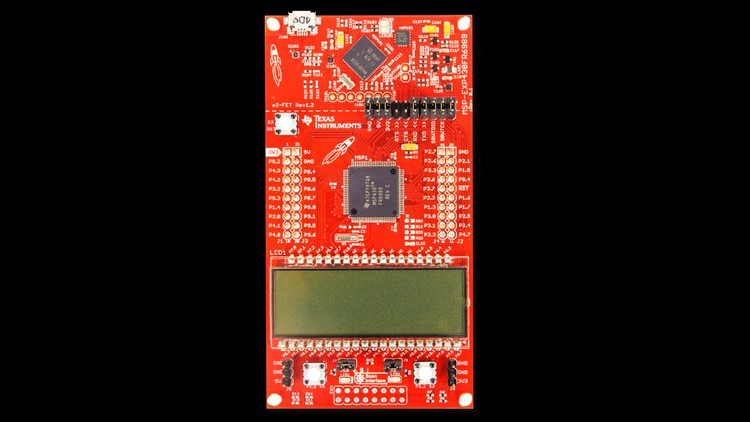
Embedded Systems STM32 HAL APIs Driver Development
Phát triển Driver STM32 HAL API cho Hệ thống Nhúng

4.3
(343 đánh giá)
2,522 học viên

Giảng viên
BHM Engineering Academy
Phụ đề tiếng Anh
Bán chạy
Đánh giá cao
50.000đ
949.000đ
-95%
Bao gồm phụ đề tiếng Việt, tiếng Anh
11.5 giờ video
44 bài giảng
Truy cập vĩnh viễn
Học trên mọi thiết bị
Cập nhật: 31/05/2026
Bạn sẽ học được gì
Yêu cầu
Không yêu cầu kinh nghiệm lập trình – Tôi sẽ dạy bạn mọi thứ cần biết.
STM32F411-NUCLEO.
Chúng ta sẽ sử dụng STM32CubeIDE miễn phí.
Đối tượng phù hợp
Nội dung khóa học
12 phần • 44 bài giảng
1
Tải tài liệu cần thiết
1
Lưu ý
2
Tải CubeIDE
3
Thiết lập STM32CubeIDE
4
Tổng quan
5
Lưu ý
6
Lấy gói STM32 phù hợp
1
Tổng quan về module GPIO của ARM Cortex-M
2
Lưu ý
3
Lập trình: Làm quen với thiết lập và HAL
4
Lập trình: Phát triển driver GPIO dựa trên tài liệu
1
Tổng quan về giao thức UART
2
Lập trình: Phát triển driver UART (Phần 1)
3
Lập trình: Phát triển driver UART (Phần 2)
4
Lập trình: Định tuyến lại printf
1
Hiểu về bộ đếm thời gian SysTick
2
Hiểu về bộ đếm thời gian STM32
3
Lập trình: Phát triển driver Timer phần cứng (Phần 1)
4
Lập trình: Phát triển driver Timer phần cứng (Phần 2)
1
Hiểu các chế độ độc lập của ADC
2
Lập trình: Phát triển driver ADC chuyển đổi liên tục (Phần I)
3
Lập trình: Phát triển driver ADC chuyển đổi liên tục (Phần II)
4
Lập trình: Phát triển driver ADC chuyển đổi đơn lẻ
1
Hiểu về ngắt
2
Lập trình: Phát triển driver ngắt đầu vào EXTI
3
Lập trình: Sử dụng nhiều ngắt đầu vào EXTI
4
Lập trình: Phát triển driver ngắt ADC
5
Lập trình: Phát triển driver ngắt UART
6
Lập trình: Sử dụng nhiều module UART
1
Tổng quan về module DMA
2
Lập trình: Phát triển driver ADC DMA
3
Lập trình: Phát triển driver ADC đa kênh DMA
4
Lập trình: Phát triển driver UART DMA
5
Lập trình: Truyền DMA từ bộ nhớ sang bộ nhớ
1
Hiểu về giao thức SPI
2
Lập trình: Phát triển driver SPI dạng thăm dò (Polling)
3
Lập trình: Phát triển driver SPI dạng ngắt
4
Lập trình: Phát triển driver SPI DMA
1
Hiểu về giao thức I2C
2
Lập trình: Viết driver I2C để đọc dữ liệu từ cảm biến gia tốc ADXL345 (Phần 1)
3
Lập trình: Viết driver I2C để đọc dữ liệu từ cảm biến gia tốc ADXL345 (Phần 2)
1
Hiểu về đồng hồ thời gian thực
2
Lập trình: Phát triển driver RTC
1
Lời kết
Giới thiệu khóa học
Welcome to the Embedded Systems STM32 Hardware Abstraction Layer (HAL) Driver Development course.
The STM32 Hardware Abstraction Layer (HAL) provides a simple, generic multi-instance set of APIs (application programming interfaces) to interact with the upper layers like the user application, libraries and stacks.
The HAL driver APIs are split into two categories: generic APIs, which provide common and generic functions for all the STM32 series and extension APIs, which include specific and customized functions for a given line or part number. The HAL drivers include a complete set of ready-to-use APIs that simplify the user application implementation. For example, the communication peripherals contain APIs to initialize and configure the peripheral, manage data transfers in polling mode, handle interrupts or DMA, and manage communication errors.
In summary, the HAL offers high-level and feature-oriented APIs with a high-portability level. These hide the MCU and peripheral complexity from the end-user.
With a programming based approach, this course is designed to give you a solid foundation in firmware and peripheral driver development for the STM32 family of microcontrollers. The goal of this course is to teach you how to navigate the microcontroller reference manual and datasheet to extract the right information to professionally build peripheral drivers and firmware using the STM32 HAL APIs
By the end of this course you will be able to develop drivers for peripherals like the ADC, UART,PWM, GPIO, TIMER,I2C, SPI, RTC, RCC, EXTI etc. You will also master the STM32 architecture and how to build professional embedded firmware for STM32 microcontrollers.
Please take a look at the full course curriculum.
REMEMBER : I have no doubt you will love this course. Also it comes with a FULL money back guarantee for 30 days! So put simply, you really have nothing to loose and everything to gain.
Sign up and let's start toggling some register bits.
--------------------------------------Some highlights------------------------------------
Write Analog-to-Digital Converter (ADC) drivers using HAL functions
Write PWM drivers using HAL functions
Write UART drivers using HAL functions
Write TIMER drivers using HAL functions
Write Interrupt drivers using HAL functions
Write SPI drivers using HAL functions
Write I2C drivers using HAL functions
Write RTC drivers using HAL functions
Write DMA drivers using HAL functions
Write RCC drivers using HAL functions
50.000đ
949.000đ
-95%
Bao gồm phụ đề tiếng Việt, tiếng Anh
11.5 giờ video
44 bài giảng
Truy cập vĩnh viễn
Học trên mọi thiết bị
Cập nhật mới nhất: 31/05/2026
Khóa học liên quan
Khám phá thêm các khoá học cùng chủ đề

Lập trình C nhúng cho Vi điều khiển: Dành cho người mới bắt đầu tuyệt đối
FastBit Embedded Brain Academy
4.5
(15859)
72,197
50.000đ
349.000đ
-86%

Khóa học Lập trình C Nâng cao
Tim Buchalka's Learn Programming Academy
4.5
(5638)
45,135
50.000đ
1.559.000đ
-97%

Xây Dựng Phần Mềm Độc Hại Không Bị Phát Hiện Bằng Ngôn Ngữ C: Hacking Đạo Đức
Aleksa Tamburkovski
4.5
(1495)
43,847
50.000đ
349.000đ
-86%

Làm chủ Vi điều khiển: Timer, PWM, CAN, Chế độ tiết kiệm năng lượng (MCU2)
FastBit Embedded Brain Academy
4.6
(4113)
38,505
50.000đ
349.000đ
-86%

Lập trình Hệ thống Nhúng trên Bộ xử lý ARM Cortex-M3/M4
FastBit Embedded Brain Academy
4.6
(6972)
38,200
50.000đ
2.299.000đ
-98%


Hội thảo Raspberry Pi 2018: Trở thành Lập trình viên / Nhà chế tạo / Nhà phát minh
Core Electronics
4.6
(4347)
101,374
50.000đ

Làm chủ phát triển vi điều khiển và trình điều khiển nhúng
FastBit Embedded Brain Academy
4.6
(12843)
78,833
50.000đ
349.000đ
-86%
Lập trình C nhúng cho Vi điều khiển: Dành cho người mới bắt đầu tuyệt đối
FastBit Embedded Brain Academy
4.5
(15859)
72,197
50.000đ
349.000đ
-86%
Khóa học Arduino hoàn chỉnh cho người mới bắt đầu
Chingiz Nazar
4.6
(710)
53,812
50.000đ
399.000đ
-87%


Thành thạo RTOS: Thực hành FreeRTOS và STM32Fx với Debugging
FastBit Embedded Brain Academy
4.5
(7446)
43,993
50.000đ
349.000đ
-86%
Làm chủ Vi điều khiển: Timer, PWM, CAN, Chế độ tiết kiệm năng lượng (MCU2)
FastBit Embedded Brain Academy
4.6
(4113)
38,505
50.000đ
349.000đ
-86%
Làm chủ phát triển vi điều khiển và trình điều khiển nhúng
FastBit Embedded Brain Academy
4.6
(12843)
78,833
50.000đ
349.000đ
-86%
Thành thạo RTOS: Thực hành FreeRTOS và STM32Fx với Debugging
FastBit Embedded Brain Academy
4.5
(7446)
43,993
50.000đ
349.000đ
-86%
Làm chủ Vi điều khiển: Timer, PWM, CAN, Chế độ tiết kiệm năng lượng (MCU2)
FastBit Embedded Brain Academy
4.6
(4113)
38,505
50.000đ
349.000đ
-86%

Lập trình Embedded Systems Bare-Metal từ nền tảng (STM32)
Israel Gbati
4.5
(3629)
22,451
50.000đ
419.000đ
-88%

Phát triển Bootloader tùy chỉnh cho vi vi điều khiển STM32Fx
FastBit Embedded Brain Academy
4.6
(2296)
16,386
50.000đ
349.000đ
-86%
Khóa học Thiết kế Phần cứng Điện tử Hoàn chỉnh 2025 - EsteemPCB
Aviral Mishra
4.3
(1434)
9,949
50.000đ
1.549.000đ
-97%


Bluetooth Low Energy (BLE) Cơ Bản Đến Nâng Cao™
Israel Gbati
4.3
(882)
6,365
50.000đ
1.189.000đ
-96%
